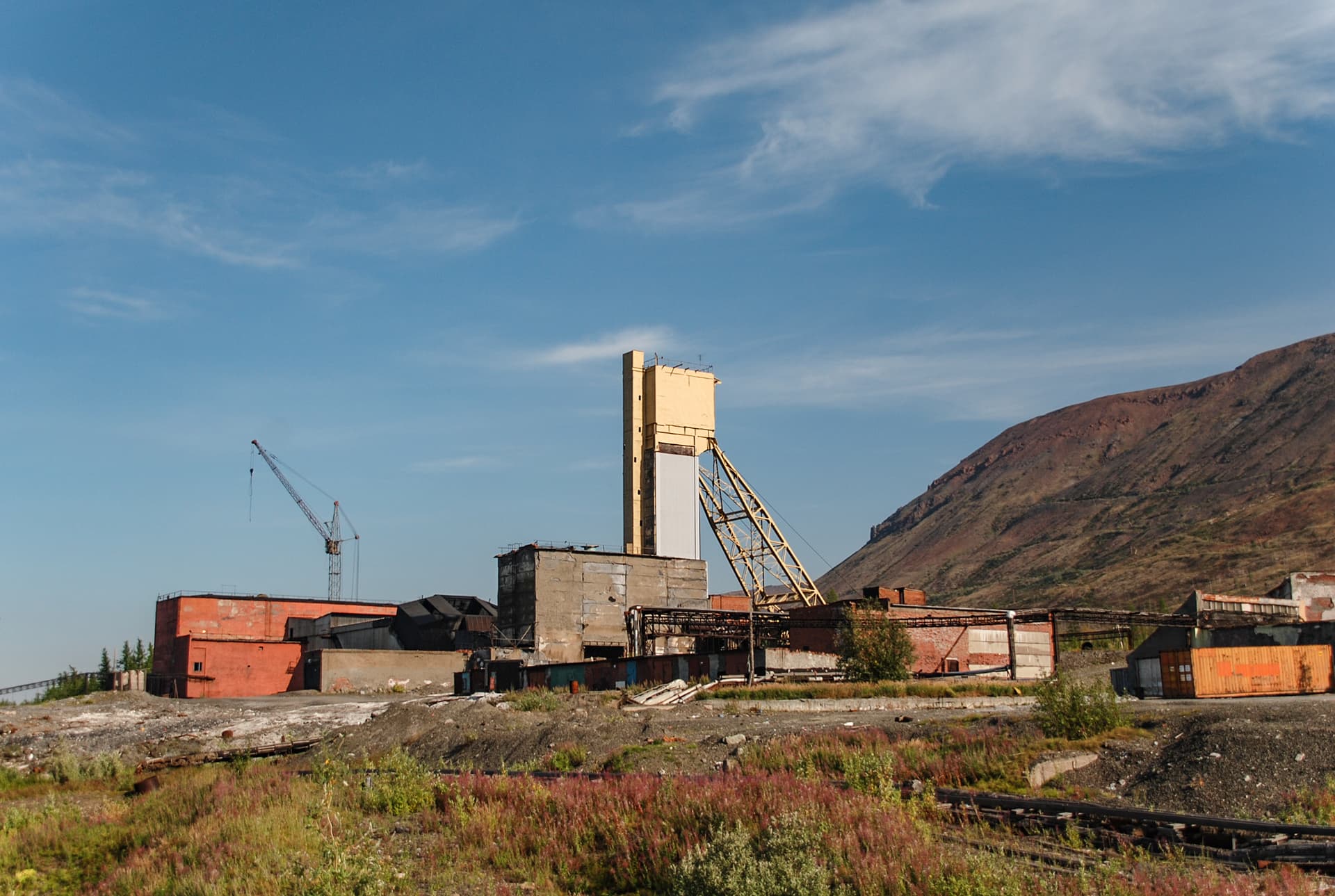
The West stopped refining nickel.
China and Indonesia hold over 60% of global nickel ore and 90% of refining capacity. Nearly every major refinery outside that block is closed, throttled, or on state life support.
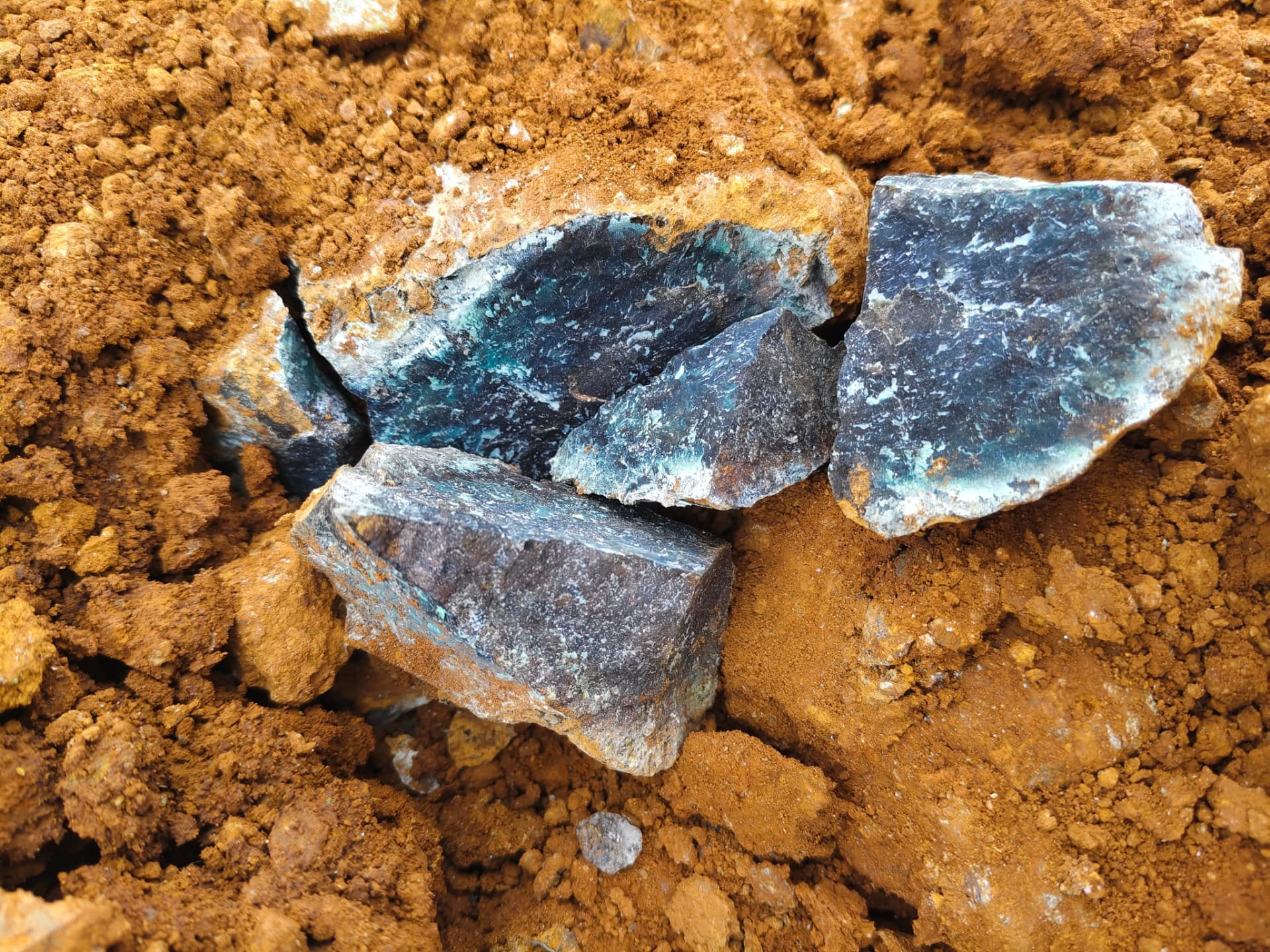
Nickel laterite ore from Indonesia
- 90%
- of global refining capacity is Chinese-owned
- 60%
- of ore comes from Chinese-owned Indonesian mines
- 0
- primary nickel refineries operating in the US
- $15k
- per tonne nickel, down from $43k in 2022
A refining monopoly built on scale, cheap power, low cost of capital, and closed technology
High pressure acid leaching, the primary route for nickel laterites refining, was developed largely in China and is operated by Chinese companies. Poor knowledge transfer has been a structural barrier to installing HPAL in the West, and aggressive pricing has undercut every emergent competitor.
The result: the United States has no operating primary nickel refinery. Eramet has closed facilities, BHP canceled new builds, and a $2.6B HPAL project was shelved. Refineries across New Caledonia and Australia have been significantly curtailed if not mothballed.
Where is the capacity
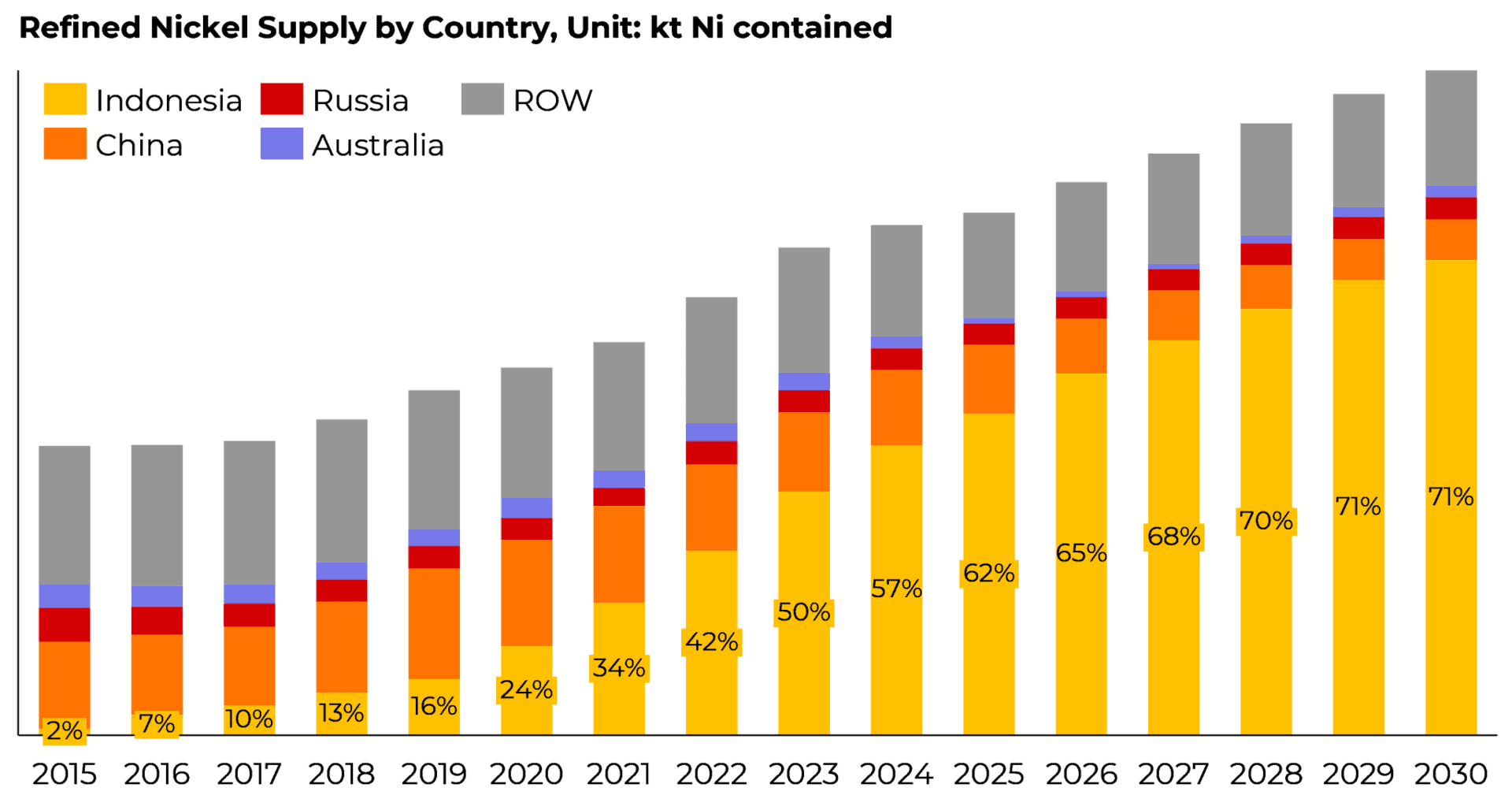
Six structural disadvantages, not six bad management teams
Power is the swing cost
New Caledonian electricity runs two to three times European and Indonesian rates, and power alone can be 40% of fixed and variable cost. Indonesian electricity is projected 40% cheaper than Australian.
Labor arbitrage
Indonesian labor costs roughly a third of Australian labor. Western operators also carry a regulatory load Indonesian assets do not.
Cost of capital
Indonesian projects finance at 1–4%. Australian projects often exceed 8%. On a capital-intensive HPAL plant, that spread alone decides viability.
Aging assets never hit nameplate
Doniambo and Koniambo ran at 40% and 50% of capacity for five years on feedstock shortfalls, overhauls, and unplanned equipment failures.
Wrong product, wrong index
Ferronickel producers are levered to stainless steel, which collapsed faster than the Class I nickel price and has not recovered. Class I sulfate carries a far more stable index.
Modernization does not rescue economics
$3B at Kalgoorlie, $3B at Doniambo, $590M at Prony. Long lead times and cost overruns consumed the upgrades before they earned back.
What a competitive refinery has to hit
| Metric | Incumbent technology | Target to compete |
|---|---|---|
| Energy | 230–530 GJ / t Ni (laterite routes) | < 20 GJ / t Ni |
| OpEx | HPAL $5,250–11,000 · RK-EF $9,500–13,000 / t Ni | < $5,000 / t Ni |
| CapEx intensity | Chinese HPAL ~$24k · Weda ~$86k · FPX ~$57k per t Ni/yr | < $24,000 / t Ni/yr |
| CO₂ | Pig nickel 69 · HPAL 19 · sulfides 10 t CO₂ / t Ni | < 10 t CO₂ / t Ni |
| Recovery | 90–98% | > 95% |
| Selectivity | 20% for ferronickel end uses | > 98% for all other end uses |
Design constraints
A refinery that survives the next cycle must be low-CapEx to cut weighted average cost of capital, low-electricity to survive expensive grids, and low-labor through automation. It must produce a high-purity Class I product rather than ferronickel exposed to the stainless-steel index. Waste streams have to be treatable or recyclable, and reagents need robust, stable supply.
The domestic base is thin, and that is the constraint to solve
One operating US nickel mine
Eagle Mine in Michigan is the only active domestic source of nickel ore today.
Two mines in permitting
Talon and NewRange Copper are in permitting. If both break ground, the US has three potential refinery feedstock partners this decade.
$8.5B invested abroad
US government capital is flowing into Australian critical mineral processing rather than domestic refining capacity.
$40B → $80B market
Global nickel value could double by 2034 on NMC battery demand, or stay flat near $40B if LFP chemistry wins.
Reshoring is not only a mining question. A refining technology with low capital intensity at small scale would make on-site refining viable at 100+ nickel sites across North America and Europe, instead of concentrating a decade of capital into a single billion-dollar plant that must run at nameplate to break even.